

Property owners throughout Napa Valley understand the importance of wildfire preparedness. With dry summers, changing weather conditions, and landscapes that often include slopes, woodlands, and large open spaces, creating and maintaining defensible space has become an essential part of responsible property management.
A fire-safe landscape does not require sacrificing beauty or functionality. Through thoughtful plant selection, proper spacing, fuel reduction, and ongoing maintenance, property owners can help reduce wildfire risk while preserving the character and value of their landscapes.
This guide outlines the key principles of fire-safe landscape design in Napa County, including where to focus mitigation efforts, which landscape features require the most attention, and how regular maintenance helps support long-term wildfire preparedness.
Key Takeaways
- The area closest to a structure plays the most important role in reducing wildfire risk and should be the first priority when creating defensible space.
- Removing dead vegetation, accumulated debris, and ladder fuels can significantly improve a property’s fire resilience.
- A fire-resistant landscape can remain attractive and functional when plant selection, spacing, and maintenance are thoughtfully planned.
- Properties with slopes, dense vegetation, extensive tree canopies, or long fence lines may require additional wildfire mitigation strategies.
- Regular landscape maintenance is essential to preserving defensible space and supporting long-term fire safety goals.
Start at the Structure and Work Outward
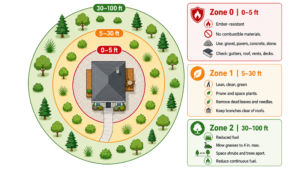
Creating defensible space begins closest to the structure and expands outward. CAL FIRE guidelines divide defensible space into zones, each with specific objectives designed to help reduce wildfire risk and improve a property’s resilience during a wildfire event.
Zone 0: Ember-Resistant Zone (0–5 Feet)
The area immediately surrounding a home, guesthouse, barn, or other structure is often considered the most critical zone for wildfire protection. This space should be designed to minimize the presence of combustible materials that could ignite from wind-driven embers.
Common Landscape Materials
- Gravel
- Decomposed granite
- Pavers
- Concrete
- Stone
Materials and Features to Evaluate Carefully
- Bark mulch and wood chips
- Firewood storage
- Dense foundation plantings
- Dry ornamental grasses
- Accumulated leaves or debris
Zone 1: Reduced Fuel Zone (5–30 Feet)
Within this zone, the focus shifts to reducing fuel loads and maintaining healthy, well-spaced vegetation. Plants should be regularly maintained, irrigated appropriately, and monitored for dead or declining material.
Key maintenance practices include:
- Removing dead leaves, branches, and other combustible debris.
- Maintaining appropriate spacing between trees and shrubs.
- Keeping vegetation clear of structures, roofs, and chimneys.
- Monitoring irrigation systems to support plant health during the dry season.
Zone 2: Extended Defensible Space (30–100 Feet)
For larger properties, this zone helps slow the spread of wildfire by reducing continuous fuels and creating greater separation between vegetation.
Common management practices include:
- Mowing annual grasses and weeds during fire season.
- Maintaining appropriate horizontal and vertical spacing between shrubs and trees.
- Removing dead vegetation and ladder fuels.
- Managing vegetation on slopes and other high-risk areas where fire may spread more rapidly.
Reduce Fuel Loads Before Making Landscape Improvements
For many Napa County properties, improving wildfire resilience begins with reducing combustible vegetation and identifying potential ignition risks. Before implementing new landscape enhancements or planting plans, it is important to evaluate existing conditions and address areas that may contribute to fire spread.
Key areas to assess include:
- Dead or declining vegetation — Dry shrubs, dead branches, and accumulated plant material can increase fuel loads and should be removed as part of regular landscape maintenance.
- Ladder fuels — Vegetation growing beneath tree canopies can allow fire to move from the ground into the tree crown. Proper pruning and plant spacing can help reduce this risk.
- Dense vegetation near structures — Continuous hedges or densely planted areas adjacent to homes and outbuildings may create pathways for fire spread and should be evaluated as part of a defensible space strategy.
- Combustible groundcovers and mulches near structures — Within the area closest to buildings, consider alternatives such as gravel, stone, or decomposed granite where appropriate.
- Overgrown grasses and weeds — Annual grasses, particularly on slopes and south- or west-facing exposures, should be managed throughout fire season.
- Rooflines, gutters, and adjacent landscape areas — Leaves, pine needles, and other debris can accumulate quickly and should be removed regularly to help reduce ignition potential.
For larger residential, vineyard, or estate properties, wildfire preparedness often extends beyond the immediate landscape. Fence lines, outbuildings, equipment storage areas, driveways, and property boundaries should also be included in ongoing defensible space evaluations. Thoughtful planning and regular maintenance can help reduce risk while preserving the property’s appearance and functionality.
For additional guidance, property owners can review current defensible space recommendations through CAL FIRE and local fire protection agencies.
Plant Selection and Landscape Design Considerations
When designing a fire-resistant landscape, plant selection is only one part of the equation. Proper spacing, ongoing maintenance, irrigation, and strategic landscape design all play important roles in reducing wildfire risk.
It is important to remember that no plant is completely fireproof. The goal is to select plants that are appropriate for the site, maintain healthy moisture levels, and can be managed effectively as part of a comprehensive defensible space strategy.
Groundcovers
Low-growing, well-maintained groundcovers can help reduce fuel continuity while providing seasonal color and erosion control. Depending on site conditions, options such as gazania, ice plant, and creeping thyme may be appropriate for portions of the landscape where irrigation and maintenance can be supported.
Shrubs
Shrub selection should prioritize healthy growth habits, appropriate spacing, and ease of maintenance. Plants such as lavender, salvia, and certain California native buckwheats may be suitable choices when properly maintained. Avoid allowing shrubs to become overgrown or densely massed near structures, as accumulated woody material can increase fire risk.
Trees
Trees should be evaluated for both health and spacing. Maintaining appropriate separation between tree canopies and creating vertical clearance between lower branches and understory vegetation can help reduce the potential for fire to spread into the canopy. Deciduous trees are often incorporated into fire-conscious landscape designs due to their seasonal characteristics and growth habits.
Hardscape Features
Hardscape elements such as driveways, patios, retaining walls, gravel pathways, and decomposed granite areas can serve as important fuel breaks while enhancing the overall functionality and appearance of a property. When incorporated thoughtfully, these features can contribute to both landscape design and wildfire preparedness goals.
Fire Safety Considerations for Larger Properties and Hillside Sites
Many properties throughout Napa Valley, including those in hillside and rural areas, face additional wildfire challenges due to topography, vegetation density, and access limitations.
Slopes can increase the rate at which fire spreads, while canyons, drainage corridors, and natural vegetation areas may create conditions that require additional management and maintenance.
Property owners should pay particular attention to:
- South- and west-facing slopes, which often dry out more quickly and may accumulate higher fuel loads during the summer months.
- Fence lines and property boundaries where vegetation and debris can accumulate over time.
- Orchard, vineyard, and landscape transition areas adjacent to native vegetation.
- Drainage areas, ravines, and other locations where dead plant material may collect.
- Access roads and driveways that should remain clear and accessible for emergency vehicles.
For larger residential and estate properties, wildfire preparedness is most effective when incorporated into a regular landscape maintenance program that includes seasonal inspections, vegetation management, and ongoing defensible space evaluations.
When to Consider Professional Assistance
Many routine wildfire preparedness tasks can be incorporated into regular property maintenance, including debris removal, gutter cleaning, basic irrigation monitoring, and seasonal vegetation management.
However, larger or more complex properties often benefit from professional evaluation and maintenance, particularly when they involve:
- Hillsides or steep slopes
- Extensive tree canopies and wooded areas
- Brush management and fuel reduction
- Tree pruning that requires specialized equipment
- Irrigation system modifications
- Defensible space planning for larger residential or estate properties
A professional landscape assessment can help identify potential risks, prioritize improvements, and develop a maintenance strategy that supports both wildfire resilience and long-term landscape health.
Next Steps for Improving Wildfire Resilience
Whether you own a residential property, vineyard estate, or larger rural parcel, wildfire preparedness begins with understanding your site’s unique conditions.
Consider starting with the following:
- Evaluate the area immediately surrounding structures and remove accumulated debris, dead vegetation, and other combustible materials.
- Review the property for potential fuel loads, including overgrown grasses, dense vegetation, ladder fuels, and unmanaged slope areas.
- Assess landscape irrigation, plant spacing, and maintenance practices to identify opportunities for improvement.
- Schedule a professional site evaluation if your property includes significant acreage, steep terrain, dense vegetation, or has not been reviewed recently for wildfire preparedness.
Important Compliance Considerations
Properties located within California’s State Responsibility Areas (SRAs) may be subject to CAL FIRE defensible space requirements and seasonal inspections. Property owners should review current regulations and consult local fire agencies or CAL FIRE resources to understand applicable requirements for their location.
Ready to Make Your Property Fire-Safe This Season?
Landesign‘s firescaping and vegetation management services cover everything from initial site assessment and planting redesign to ongoing maintenance programs that keep your landscape fire-safe through the driest months.
Reach out to Landesign today and let’s get your property protected.
📞 Call us at (707) 578-2657

COO
John “JJ” Fitzgerald is the Chief Operating Officer of Landesign Construction & Maintenance, a leading commercial landscaping firm in Northern California. Raised in the family business, he has spent over a decade applying his expertise in business management and analytics to foster innovation within the company. A graduate of Cal Poly–San Luis Obispo, his writing focuses on the intersection of modern business strategy and traditional craftsmanship, particularly how sustainable technology can reshape the future of legacy industries. He lives in the Bay Area with his family.