

While Napa County is known for its relatively mild climate, summer temperatures can change quickly. Average highs typically range from the mid-70s to mid-80s, but periodic heat events can push temperatures into the 90s and place additional stress on landscapes.
These temperature swings can affect plant health, soil moisture, and irrigation performance. Without proper preparation, extreme heat can lead to water stress, plant decline, and increased maintenance needs.
Whether managing a residential estate, HOA community, or commercial property, proactive maintenance can help landscapes remain healthy and resilient throughout the summer months. The following checklist outlines practical steps to help protect your landscape and support long-term performance during periods of hot weather.
Key Takeaways
- Watering timing matters as much as watering amount: early morning is almost always the right answer
- A 3-inch layer of mulch can dramatically reduce soil temperature and slow moisture loss during heat spikes
- Both native/drought-tolerant plants and ornamental gardens need heat adjustments
- Pruning during a heat wave does more harm than good; hold off until temperatures drop
- An irrigation system that isn’t calibrated for seasonal change will over- or under-water without you knowing it
Watering
Watering is where most heat damage either starts or gets prevented. The goal isn’t more water, it’s smarter water at the right time.
❑ Water Early in the Morning
Early morning irrigation is generally the most effective time to water. Cooler temperatures and lower wind conditions allow moisture to reach the root zone before the heat of the day increases evaporation.
❑ Water Deeply, Less Often
Deep, less frequent watering encourages stronger root development and helps plants access moisture deeper in the soil profile. Shallow, frequent watering can lead to weaker root systems that are more susceptible to heat stress.
❑ Give More Water Before a Heat Spike
When higher temperatures are forecast, consider increasing soil moisture with a deep watering before the heat arrives. Providing adequate moisture in advance can help reduce plant stress during periods of extreme heat.
❑ Check Soil Moisture Before Watering
Before adjusting irrigation schedules, check soil moisture levels around plant root zones. Overwatering can be just as harmful as underwatering and may contribute to root health issues and reduced plant performance.
❑ Focus on the Root Zone
Efficient irrigation methods, such as drip systems and soaker hoses, deliver water directly to the root zone where plants need it most. These systems can also help reduce water waste and support healthier plant growth during the summer months.
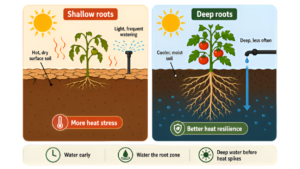
Alt Text: A graphic depicting the difference between shallow and deep root systems.
Mulch
Bare soil heats up fast. On a hot Napa County afternoon, exposed ground near patios, walkways, or driveways absorbs and radiates heat that stresses nearby root systems. Mulch is the most straightforward fix.
❑ Apply a 3-inch Layer of Organic Mulch
This should go around the base of shrubs, trees, and ornamental beds. This depth insulates the soil, retains moisture, and keeps root zone temperatures significantly cooler during heat spikes.
❑ Keep Much Away from Plant Bases
Direct contact traps moisture against the bark and creates conditions for rot and pest entry. Tree trunks and plant stems should be a few inches away from mulch to prevent this.
❑ Refresh Mulch That Has Thinned Out
Over winter and spring, mulch compacts and breaks down. If your layer is less than 2 inches, it’s not doing the job it needs to in summer.
❑ Choose the Right Mulch Material
Shredded bark and wood chip mulches work well for estate gardens. Avoid rubber mulch or rock mulch in areas with heat-sensitive ornamentals; they absorb and re-radiate heat rather than insulating against it.
Sun Exposure
Not every plant on your property carries the same heat risk. Knowing which ones need extra attention during a heat event saves you from playing catch-up after the damage is done.
❑ Check West and South Facing Beds First
These areas get the most direct afternoon sun and heat up the fastest. Plants here are your highest-risk zones during heat spikes.
❑ Watch for Scorch on Large-Leafed Ornamentals
Hydrangeas, Japanese maples, and similar plants are beautiful in Napa gardens but tend to show heat stress quickly: wilting in the afternoon, browning leaf edges, or drooping that doesn’t recover by morning.
❑ Newly Planted Material Need Shade Protection
Any plant installed within the last 12 months has a limited root system and much less tolerance for heat extremes. Temporary shade cloth (30–50% coverage) can carry a new plant through a heat event.
❑ Container Plants Dry Out Much Faster
Potted plants on patios and terraces can go from moist to critically dry in a single hot day. Check containers daily during heat spikes and move them to shade if possible.
❑ Don’t Prune During a Heat Wave
Cutting back plants when they’re already heat-stressed removes the foliage that’s helping shade their own stems and depletes the energy reserves they need to recover.
Irrigation System Check
An irrigation system may appear to be operating properly while still delivering inconsistent coverage during periods of peak summer demand. A seasonal inspection can help identify issues before they affect plant health.
❑ Test Each Irrigation Zone
Run each irrigation zone and observe its performance. Look for clogged heads, uneven coverage, overspray, puddling, or dry areas that may indicate water is not reaching the intended planting areas.
❑ Evaluate Spray Head Alignment
Sprinkler heads can shift over time due to foot traffic, landscape maintenance activities, or ground settling. Verify that water is being directed toward planting areas rather than sidewalks, driveways, or other hardscape surfaces.
❑ Review Controller Settings
Irrigation requirements often change throughout the year. Controller schedules should be reviewed and adjusted seasonally to reflect current weather conditions and plant water needs.
❑ Check for Leaks
Inspect for signs of leaks, including unusually wet areas, standing water near valve boxes, or unexplained increases in water use. Addressing leaks promptly can improve irrigation efficiency and help prevent plant stress.
❑ Consider Smart Irrigation Technology
Weather-based “smart” controllers can automatically adjust watering schedules based on local conditions. These systems can improve water efficiency and help landscapes respond more effectively to changing summer weather patterns.
Soil Health
Plants in healthy, well-structured soil handle heat stress better. Compacted or nutrient-depleted soil reduces a plant’s ability to move water through its root system when demand is highest.
❑ Aerate Compacted Areas
High-traffic zones around estate properties often have compacted soil that limits water penetration. If water pools on the surface and runs off rather than soaking in, compaction is likely a factor.
❑ Check that Drainage is Working
Soggy soil after irrigation or a wet spell can become anaerobic (oxygen-deprived) and damage roots before summer heat even starts.
❑ Hold Off on Heavy Fertilization in Peak Summer
Fertilizers push new growth, and new growth is more heat-sensitive than established growth. Light feeding is fine, but a heavy fertilization push during a heat spike can stress plants more than help them.
Ready to Get Your Napa County Landscape Through Summer Strong?
Landesign has been working with HOAs, property managers and estate owners across Napa County for over 35 years. We understand the climate here and the specific demands they place on high-end residential landscapes.
Call Landesign and Let’s Get Your Property Ready for Summer!
📞 Call us at (707) 578-2657

COO
John “JJ” Fitzgerald is the Chief Operating Officer of Landesign Construction & Maintenance, a leading commercial landscaping firm in Northern California. Raised in the family business, he has spent over a decade applying his expertise in business management and analytics to foster innovation within the company. A graduate of Cal Poly–San Luis Obispo, his writing focuses on the intersection of modern business strategy and traditional craftsmanship, particularly how sustainable technology can reshape the future of legacy industries. He lives in the Bay Area with his family.